
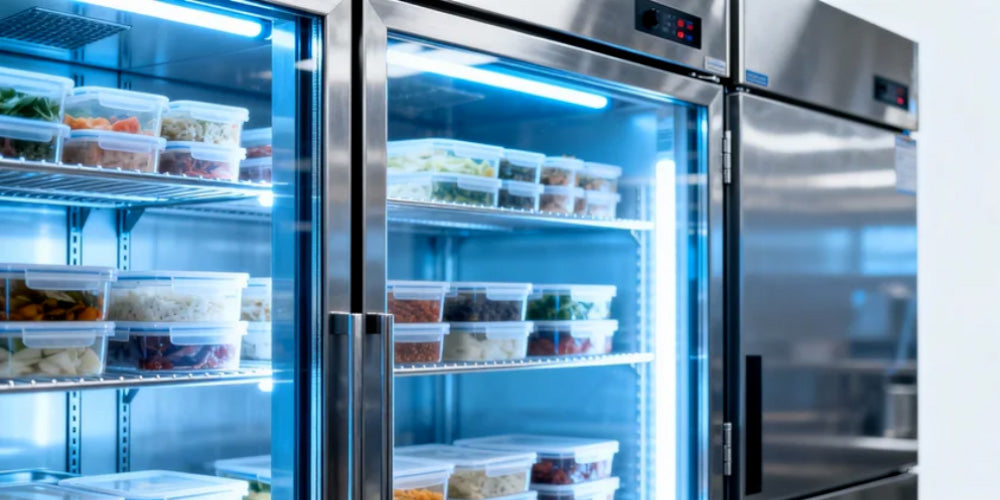
Commercial Refrigerator Temperature: The 40°F Rule + A Simple Stability Checklist
A commercial refrigerator isn’t “just cold storage.” It’s one of the most important tools for protecting ingredient quality, reducing food loss, and keeping daily operations smooth—especially during rush hours when doors open constantly.
The good news: most temperature problems come from a handful of predictable issues, and you can prevent them with a simple routine and the right equipment features.
1) What temperature should a commercial refrigerator be?
For food safety, keep:
- Refrigerators at 40°F (4°C) or below
- Freezers at 0°F (-18°C) or below
Always follow your local health code and your operation’s HACCP plan if it requires a stricter standard.
Pro tip: Don’t trust the dial—verify the actual cabinet temperature
Many controls don’t show the true internal temperature. Keep an inexpensive freestanding appliance thermometer inside the unit and check it consistently.
- Place it in the warmest zone (often upper/front area near the door).
- Check at the same times every day (e.g., before prep and after rush).
- If the display and thermometer disagree, trust the thermometer and troubleshoot causes below.
External references (authority sources):
2) Where temperature problems usually start (and how to spot them fast)
Even good units can drift if workflow or upkeep slips. Watch for these common causes:
A) Overpacking blocks airflow
Cold air must circulate to keep everything evenly chilled. If products are pressed against vents or packed too tightly, you’ll often see uneven temps across shelves (top warm / bottom cold).
B) Frequent door opening during peak hours
Every open door dumps cold air. If recovery is slow during rush, reduce “open-door browsing” and stage ingredients before service.
C) Hot product loads
Loading large pans of warm food can pull cabinet temps upward for a long time. Use smaller, shallower containers for faster chilling when possible.
D) Dirty condenser area
Dirty condenser coils/filters force longer run times and weaker cooling. This is one of the most common “easy wins” for stability.
E) Worn door gaskets or misalignment
If gaskets leak, you lose cold air continuously. If the door “bounce-backs” or doesn’t seal, fix alignment and replace worn gaskets.
3) A simple temperature-check routine (daily, weekly, monthly)
| Frequency | What to do | Why it helps |
|---|---|---|
| Daily (2 minutes) |
|
Catches drift early and prevents “silent” warm zones. |
| Weekly (10 minutes) |
|
Improves hygiene, reduces odor, and speeds service workflow. |
| Monthly (20–30 minutes) |
|
Restores efficiency and reduces peak-hour temperature swings. |
4) Equipment features that make temperature stability easier
If you’re upgrading this year (or evaluating what’s missing from your current setup), prioritize features that help most in real kitchens:
- Digital temperature control for more precise setpoint management
- Ventilated / fan-assisted cooling for more even cabinet temperatures and faster recovery
- Clear compliance signals (certification details and spec sheets on the product page)
- Commercial-grade warranty support that matches 24/7 reality
Explore Deeptide equipment by workflow
Related reading:
Conclusion
Stable refrigeration temperatures come down to three things: clear targets, simple checks, and equipment built for real commercial workflow.
If you want help choosing the right unit type for your kitchen layout and service pace, reach Deeptide support here: Contact Us
For warranty details, see: Warranty & Parts Policy